
Hours after, however, firing from the Pakistani side was reported in Akhnoor sector in Jammu and Kashmir. Drones were also seen in the Pir Panjal area.
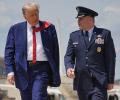
He then went on to say that, however, he won't get a Nobel Peace Prize for any of his efforts.

The lawmakers also hailed the strong strategic partnership between India and the US during a meeting with an all-party delegation led by Congress MP Shashi Tharoor, who briefed them on the cross-border terrorism faced by India and the country's strong and resolute stance in the fight against terror.
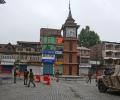
Raj Kumar Thapa, additional district development commissioner, Rajouri, and his two staff members were seriously injured when an artillery shell hit his official residence in Rajouri town, the officials said.

A deadly terror attack targeting tourists in Jammu and Kashmir's Pahalgam on Tuesday drew strong condemnation and outrage. 26 people, including two foreigners and two locals, were killed in the attack, which is the deadliest in the Valley since the Pulwama strike in 2019. Prime Minister Narendra Modi asserted that the perpetrators will not be spared and their evil agenda will never succeed. Opposition leaders demanded accountability, claiming the government's claims of normalcy in Kashmir have fallen flat.
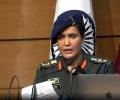
In a composed and clear presentation, Colonel Sofiya Qureshi announced that nine terrorist facilities had been destroyed in the tri-services operation.
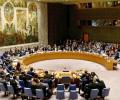
Pakistan was waiting for an opportunity to bring the Jammu and Kashmir issue to the global agenda and resorted to the terrorism route to provoke India, observes Ambassador T P Sreenivasan.

More than 118 Pakistani forward posts and their surveillance system were completely destroyed by the BSF during Operation Sindoor, dealing a major blow to the neighbouring country, Union Home Minister Amit Shah said on Friday.
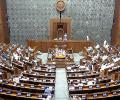
Congress general secretary in-charge communications Jairam Ramesh said that at a time when the BJP should be targeting Pakistan and terrorists, it is only interested in attacking the Congress.

The CCS meet was held at the prime minister's Lok Kalyan Marg residence, a day after he held a meeting with the top military brass and accorded operational freedom to the armed forces on the "mode, targets and timing" of India's response to the April 22 attack that killed 26 people.
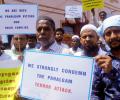
Pakistan Prime Minister Shehbaz Sharif has called on "brotherly" countries, including Saudi Arabia, to urge India to de-escalate tensions after the Pahalgam terror attack that killed 26 people. Sharif met with ambassadors from Saudi Arabia, the UAE, and Kuwait, reiterating Pakistan's commitment to peace in South Asia. He rejected India's accusations linking Pakistan to the attack, emphasizing Pakistan's own history as a victim of terrorism. The meeting comes amidst heightened tensions between the two countries.

Asserting that India will not tolerate any 'nuclear blackmail', Prime Minister Narendra Modi on Monday said operations against Pakistan have only been kept in abeyance and the future will depend on their behaviour.

Terrorists opened fire at a popular tourist spot near Kashmir's Pahalgam town on Tuesday afternoon, killing 26 people, mostly holidayers from other states, in what is the deadliest attack in the Valley since the Pulwama strike in 2019.

Admiral Mike Mullen, chairman of the United States joint chiefs of staff, just days before his retirement, has made yet another scathing indictment of Pakistan's Inter-Services Intelligence's perfidy. The spy agency maintains proxies like the Haqqani network for its own strategic depth in Afghanistan, he said.

He also said that his country would continue to talk about the Kashmir issue "through channels that are acceptable" and prayed that "the issue is amicably resolved".

Iranian Foreign Minister Abbas Araghchi visited Pakistan and called on both India and Pakistan to "exercise restraint" amid rising tensions between the two countries following the Pahalgam terror attack. Araghchi, who is scheduled to travel to India on Thursday, emphasized the importance of easing tensions and preventing further escalation. During his talks with Pakistani officials, Araghchi and Pakistani Foreign Minister Bilawal Bhutto Zardari reaffirmed their commitment to strong Pakistan-Iran ties and agreed to boost cooperation in trade, energy, and connectivity. Both sides also exchanged views on the situation in South Asia and the US-Iran talks, while agreeing that complex regional issues could be resolved through diplomacy and negotiations.

'I hear that there are some 10,000 Indians stuck in Iran, including nearly 4,000 students from Kashmir. But, I do not know any of them. Here I am all by myself and the embassy has asked me not to venture out far from my hotel. People here are going about their daily lives despite the bombings'

Billionaires Mukesh Ambani and Gautam Adani have pledged their support to the Indian armed forces, who are currently repelling intense shelling, gunfire, and drone attacks from Pakistan. "We are very proud of our Indian Armed Forces for Operation Sindoor. India stands united, fierce in resolve and unshakable in purpose, against the scourge of all forms of terrorism," Ambani, chairman and managing director of Reliance Industries Ltd, said in a statement.
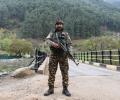
It is time we buried the mantra of 'peaceful and stable Pakistan is in our interest'. It is not, simply because Pakistan's existence -- that is synonymous with its army -- means peace has no chance, asserts Colonel Anil A Athale (Retd). It is time we buried the mantra of 'peaceful and stable Pakistan is in our interest' asserts Colonel Anil A Athale (Retd).
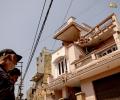
The casualties were reported hours before India and Pakistan agreed to end hostilities, which soared after the Indian Armed Forces hit terror launchpads in Pakistan and Pakistan-occupied Kashmir earlier this week in response to the Pahalgam attack.

Interacting with reporters in Kolkata, the Trinamool national general secretary reiterated that his party stood with the government in matters of national interest, combating cross-border terrorism, and safeguarding sovereignty.
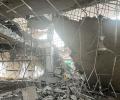
Indian Air Force S-400 Sudarshan Chakra air defence missile systems were fired last night against targets moving towards India. The targets were successfully neutralised in the operation multiple domain experts told ANI.
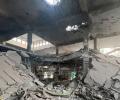
Pakistan claims it was a mosque and an educational complex that were hit in the strikes at Muridke, located at about 40 km from Lahore.
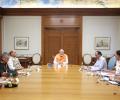
Prime Minister Narendra Modi chaired a meeting with top defence officials, including Defence Minister Rajnath Singh, National Security Advisor Ajit Doval and the chiefs of three services, amid India weighing its countermeasures following the Pahalgam terror attack which left at least 26 civilians, mostly tourists, dead. Modi has vowed to pursue the terrorists behind the attack and their patrons, a clear reference to Pakistan, to the "ends of earth" and inflict harshest punishment on them.
India has accused Pakistan of breaching an understanding reached earlier on Saturday to stop military actions. Foreign Secretary Vikram Misri said there have been repeated violations of the understanding since the evening, and that the Indian armed forces are giving an appropriate response.
The Congress Working Committee (CWC) condemned the Pahalgam terror attack, calling it a direct assault on the values of the republic. The party accused the BJP of exploiting the tragedy to promote discord and polarization, while urging for unity and solidarity in the face of adversity. The CWC also demanded a comprehensive analysis of the intelligence failures and security lapses that led to the attack.
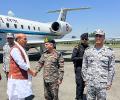
Defence Minister Rajnath Singh on Thursday questioned the safety of nuclear weapons in the hands of Pakistan, and said they should be taken under monitoring of the International Atomic Energy Agency.
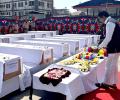
'Innocent lives lost. Tourists, families, people who were just... living. Seeking beauty. Seeking peace. And now there's only grief.'
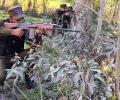
India has warned Pakistan against its unprovoked firings along the Line of Control (LoC) in Jammu and Kashmir as the directors general of military operations of the two armies spoke on the hotline amid the escalating tensions over the Pahalgam terror attack.
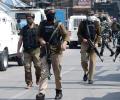
Four policemen were injured after they were allegedly beaten up by army personnel in Kupwara district of Jammu and Kashmir, officials said on Wednesday.

Prime Minister Narendra Modi on Friday said the world has seen the power of India's indigenous weapons during Operation Sindoor, which is 'not over yet'.

Tensions between India and Pakistan are escalating following last week's dastardly terror attack in Pahalgam that claimed 26 lives.
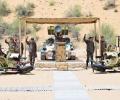
'War is not an answer. War is not a solution.' 'Deterrence is a solution. We should have the stick with us with which we can beat Pakistan.'

Prime Minister Narendra Modi on Thursday said India will identify, track and punish every terrorist and their backers who were responsible for the attack in Pahalgam "beyond their imagination". Addressing a public gathering in Madhubani, Modi said, "Today, from the soil of Bihar, I say to the whole world that India will identify, track and punish every terrorist and their backers. We will pursue them to the ends of the earth." He added that India's spirit will never be broken by terrorism and that terrorism will not go unpunished. Modi also assured that every effort will be made to ensure that justice is served, saying that the entire nation stands firm in this resolve. He thanked the people of various countries and the leaders who have stood with India in these times. Earlier, Modi and a large crowd gathered for a National Panchayati Raj Day programme observed silence for a few moments to pay homage to the victims of the terror attack in Pahalgam. Bihar Chief Minister Nitish Kumar condemned the terror attack and told the prime minister that the entire nation was united against terrorism.

Over 100 terrorists, including high-value targets such as Yusuf Azhar, Abdul Malik Rauf and Mudasir Ahmed, were eliminated during Operation Sindoor on May 7, the Indian military said on Sunday.
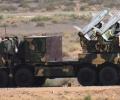
'The devastating Indian Air Force strikes on the night of May 9-10 exposed Pakistan's vulnerabilities.' 'If these had continued, it would have further degraded Pakistan's ability to continue with air operations.'
'We need to raise the costs and consequences for Pakistan. It is long overdue. Our initial surgical strike was effective for about six months. Then, the Balakot strike provided a deterrent for perhaps two to three years. But we cannot operate under the assumption that such limited responses will suffice for decades to come.'
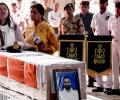
'Let his soul rest in peace...We should all be proud of him in every way. And we will make him proud in every way'

Defence attaches of several major countries who are part of many international groupings, as also of several Islamic countries attended the briefing, sources said.
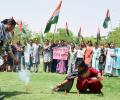
Opposition parties in India, including the Congress, Left parties, Samajwadi Party, Bahujan Samaj Party, Trinamool Congress, Dravida Munnetra Kazhagam, Rashtriya Janata Dal, Shiv Sena (UBT), and NCP (SP), have unanimously hailed the armed forces' "Operation Sindoor", a retaliatory strike against terrorist infrastructure in Pakistan and Pakistan-occupied Kashmir (PoK). The operation, which involved missile and drone strikes, was conducted in response to the April 22 Pahalgam terror attack. Despite political differences, all parties expressed support for the government and the armed forces, stressing the importance of national unity and integrity in the face of terrorism. While emphasizing the need for diplomatic avenues to prevent further escalation, some parties also called for caution in attributing political credit for the strikes.
 © 2026 Rediff.com - Advertise with us - Disclaimer - Privacy Policy - Sitemap - Feedback - About us - Terms of use - Grievances